
Doll PlayGround
Tappy GameSimulation
3.2783.00 Reviews
- Version
- 3.5.4.8
- Installs
- 10.00M
- Age Rating
- Teen
Screenshots
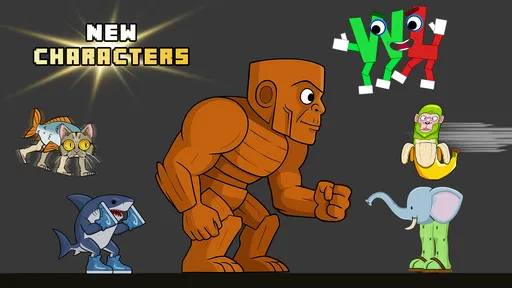
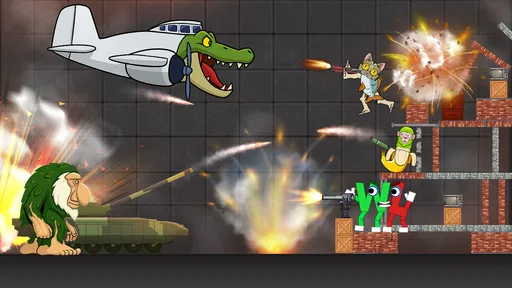
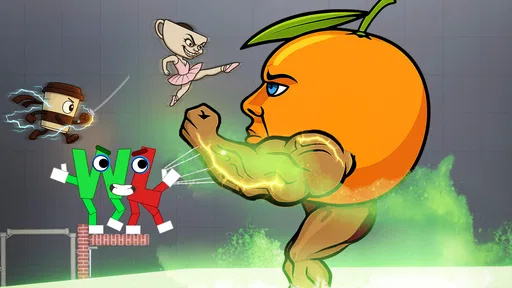
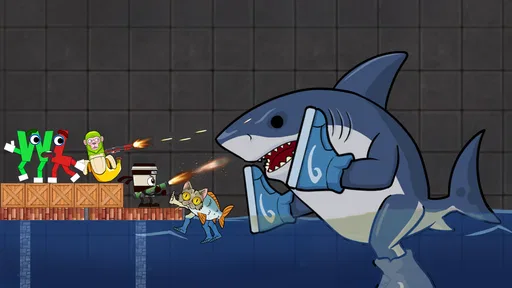
Our Review of Doll PlayGround
 Analysis by Appyee
I spent time with Doll PlayGround, a free simulation game from Tappy Game that turns a simple doll sandbox into a surprisingly open-ended place to experiment. Its store summary points toward ragdoll mutilation, and that is the central idea: you arrange a doll-like character, interact with the scene, and watch the physics produce different results. It is less about reaching a traditional finish line and more about testing situations, repeating them, and seeing how much control you can keep over the chaos.
That makes the game easy to understand within the first few minutes, but it also creates its biggest question: what keeps me playing after the novelty of the first experiments wears off? My answer is mixed. The freedom is the strongest part, especially when I want a short, consequence-free distraction. The weaker side is the lack of a clearly defined long-term goal. Players who enjoy making their own challenges may find plenty to do, while anyone expecting a structured campaign, deep unlock path, or carefully paced simulation may run out of direction sooner.
How the sandbox creates goals from very little structure
The early experience is built around curiosity rather than instruction. I do not approach it like a conventional simulation where I am given a job, a schedule, or a list of objectives. Instead, I begin by manipulating the doll and observing what happens. That immediate interaction is useful because it removes the learning barrier: I can start experimenting without first understanding a complicated economy, control scheme, or upgrade tree.
The first goals are therefore self-made. I might try to create a specific setup, see whether the doll reacts differently when the surroundings change, or repeat an action to understand the physics. This style suits short sessions because there is no need to remember a large number of rules. I can open the game, try one idea, and stop when I have seen enough.
At the same time, players should know what they are choosing. The game does not appear designed around a story with characters to follow or a career to build. Its appeal comes from the sandbox itself. If you need missions that clearly tell you what to do next, the opening may feel unusually empty. I found that the most enjoyable approach was to treat each session as a small experiment instead of waiting for the game to hand me a purpose.
One practical way to make those experiments more satisfying is to set a rule before starting. For example, I can decide to build one situation and change only a single element at a time. That turns random tapping into a simple test: I notice what changed, compare the result, and then try another variation. It is a small habit, but it gives the open format more shape without pretending that the game has a formal mission system.
The doll’s ragdoll behavior also makes failure less frustrating than it would be in a precision-based game. When an arrangement collapses or produces an unexpected result, the outcome can become the entertainment rather than a punishment. This is especially useful for younger teenagers and casual players who want playful interaction rather than pressure to perform perfectly. Still, the Teen content rating matters here: the physical violence and mutilation theme will not suit every family or every player.
What counts as progress when there is no obvious campaign?
Progress in this kind of game is mostly measured through understanding. I gradually learn which actions create a stable arrangement, which ones cause immediate chaos, and which setups are worth repeating. That is a real form of improvement, but it is personal rather than clearly displayed. I am not necessarily collecting a visible chain of accomplishments; I am becoming better at predicting and controlling the sandbox.
This design can be rewarding for people who enjoy systems more than rewards. The satisfaction comes from producing a result I intended, or from discovering an unexpected interaction and then reproducing it. A useful test is whether I feel motivated to try the same setup again with one change. If the answer is yes, the game has given me enough material to continue. If I only want to watch one surprising result once, the experience may feel short.
The absence of a strong progress ladder has another consequence: returning players need to create their own milestones. I can aim to make a more elaborate scene, find a more controlled outcome, or see how long I can keep a setup from falling apart. These are worthwhile personal challenges, but they are not the same as unlocking a new chapter or improving a character. That distinction should guide expectations before downloading.
I also found that repetition works best when I avoid changing everything at once. If I alter the doll, the arrangement, and the interaction together, I may get an interesting result but learn very little. Changing one part at a time makes the physics easier to read and gives each attempt a purpose. This is one of the more useful ways to turn the game from a quick novelty into a small laboratory.
Challenge and pacing: playful chaos instead of a rising difficulty curve
The challenge does not feel like a traditional staircase that begins gently and then introduces tougher stages. It comes from control. The more specific the result I want, the more carefully I need to arrange the situation and repeat the process. If I am happy with unpredictable reactions, the game remains relaxed. If I want a precise outcome, the same sandbox becomes more demanding.
That flexible difficulty is a strength for mixed audiences. A casual player can enjoy a few minutes of physical comedy without studying the mechanics, while a more patient player can keep refining an arrangement. I appreciate that the game does not force every session into a high-pressure test. There is room to experiment at my own pace.
However, flexible difficulty can also feel like a lack of escalation. When a game does not introduce stronger objectives or increasingly complex tasks, my attention depends on how inventive I am feeling. The early surprise may be enough for several sessions, but it does not automatically become a lasting challenge. This is where the game differs from more structured simulation alternatives, which often reward the player with new responsibilities, better tools, or more demanding scenarios.
The pacing is best described as immediate and uneven. A session can produce something interesting almost at once, then become repetitive if I continue without a new idea. I would not recommend playing for a long uninterrupted stretch while expecting a carefully directed sequence of events. Short visits work better because the game’s core interaction remains fresh when I leave before it starts to feel like the same experiment repeated.
For an everyday example, I can imagine opening it during a short break when I do not want to commit to a full game. I try one arrangement, adjust it twice, and close the app after seeing how the doll responds. That use case suits the design well. On a quiet evening when I want a deeper simulation with planning and a clear sense of achievement, I would choose something more structured instead.
Retention pressure, purchases, and the cost of staying interested
The game is free to start, which makes it easy to test whether this open-ended style suits me. Its current version is 3.5.4.8, and it supports devices running Android 7.0 or later. The broad device requirement is helpful for people using older Android hardware, although the quality of any physics-heavy experience can still depend on the individual phone or tablet.
There are in-app purchases priced from $0.99 to $29.99 per item. That range is worth keeping in mind even if I only intend to play casually. A free download lowers the initial commitment, but optional spending can change how comfortable the overall experience feels, especially for families deciding whether a teenager should use it. I would approach purchases carefully and decide in advance whether the sandbox is enjoyable enough without adding anything.
The main retention pressure is not a daily routine or a competitive ladder; it is the temptation to try one more experiment. That can be pleasant because it comes from curiosity rather than obligation. I do not feel pushed to maintain a streak simply to avoid losing progress. On the other hand, curiosity fades faster when the player has no new personal objective. The game needs me to supply the reason to return.
This is also why I would not judge its long-term value by the number of installs alone. It has passed ten million installs and holds an average rating of 3.2 from around thirteen thousand ratings, with hundreds of written reviews. Those figures show that the concept has reached a large audience, but they do not guarantee that every player will enjoy the same open-ended format. I would pay more attention to my own response after a few sessions: do I still want to test new setups, or am I repeating actions without learning anything?
For parents, the Teen rating should be treated as part of the decision rather than a minor label. The game’s subject is not a neutral dollhouse simulation; the ragdoll mutilation theme is central to its identity. Someone looking for harmless construction play, a gentle virtual pet, or an educational physics tool should choose a different type of app. The free entry point does not change the tone of the content.
How it compares with more traditional simulation games
Compared with management simulations, this title removes most of the administrative work. I am not balancing a budget, scheduling workers, expanding a town, or maintaining a long chain of upgrades. That makes it faster to understand and much easier to play in brief bursts. The trade-off is that I lose the satisfying accumulation those games provide. There is less sense of building something that remains valuable after I close the app.
It also differs from physics puzzle games. A puzzle normally asks me to reach a defined solution, while this sandbox lets me decide what a successful experiment means. That freedom is liberating when I want to play without being judged, but it can feel directionless when I need a clear answer. If I enjoy solving authored challenges, a puzzle-focused alternative will probably offer a stronger progression loop.
Against virtual doll or character apps, the tone is much rougher and more experimental. The doll is not primarily a companion I care for or customize emotionally. It is the object at the center of a physics playground. That distinction makes the experience more suitable for players interested in reactions and setups than for anyone seeking social interaction, storytelling, or nurturing mechanics.
The closest comparison is another ragdoll sandbox, but even there the important question is not which game has the most dramatic reaction. It is whether the other option gives me clearer goals, more meaningful progression, or a calmer content style. Doll PlayGround is appealing when I value immediate control and unpredictable outcomes. I would look elsewhere if I wanted a structured sequence, a strong narrative, or a more family-friendly presentation.
Who should play it, and who should skip it?
I would recommend it to players who enjoy testing virtual physics, creating their own scenarios, and laughing at unexpected results. It is a good fit for short sessions, especially when I want something interactive but do not want to learn a complicated system. People who like sandbox games and are comfortable inventing their own challenges will get more from it than players who wait for explicit instructions.
I would skip it if I need a strong campaign, visible character development, or a reliable difficulty curve. I would also avoid it for younger children because of the Teen rating and the game’s violent ragdoll theme. Players who dislike repetition should be cautious too: once the initial curiosity fades, the experience depends heavily on whether creating new experiments still feels rewarding.
Before spending money, I would play enough of the free version to answer one simple question: am I enjoying the process of setting up and observing scenes, or am I only impressed by the first few surprises? That distinction matters more here than it would in a level-based game. If the setup itself is fun, optional purchases may feel easier to evaluate. If the setup already feels like work, paying will not solve the underlying lack of direction.
My progression verdict
As a simulation sandbox, Doll PlayGround succeeds when it stays small, immediate, and unpredictable. Its early goals are easy to create, its challenge comes from gaining control over ragdoll behavior, and its pacing works best in short experimental sessions. The game does not need a complex tutorial to communicate its basic idea, which is one of its most accessible qualities.
Its long-term progression is less convincing. I do not experience the same steady pull that comes from unlocking a new area, advancing a career, or completing a carefully designed campaign. Retention depends on personal creativity, and that is both the game’s freedom and its limitation. Some players will appreciate never being told how to play; others will interpret that openness as a lack of content.
My honest recommendation is to treat it as a free-form toy rather than a full traditional simulation. If that sounds appealing, the low entry cost makes it worth trying, provided the Teen-rated theme is comfortable for you. If you want goals, unlocks, and a clear sense that every session moves you toward a larger achievement, I would choose a more structured alternative. The best reason to keep Doll PlayGround installed is not a promised finish line, but the pleasure of inventing your own experiments.
Tappy Game has built something that can be entertaining without demanding much time, yet it asks the player to provide most of the imagination. That is a fair trade for a ragdoll sandbox, but it is not a universal one. I found it most enjoyable when I approached it with a specific experiment in mind, accepted the occasional repetition, and remembered that the real progression was learning how to make the chaos behave the way I wanted.
Verdict
Strengths of Doll PlayGround
- Creative doll customization with many outfits and accessories.
- Simple controls make it easy for younger players to enjoy.
- Relaxing gameplay without demanding reflexes or complex rules.
- Encourages imaginative storytelling through different doll scenes.
- Bright visuals and playful designs are appealing to children.
Limitations of Doll PlayGround
- Limited activities may become repetitive after extended play.
- Some items or features may require in-app purchases.
- Ads can interrupt gameplay in the free version.
- Requires storage space for assets and downloaded content.
- Privacy settings should be checked before children use the app.
Other Releases by Tappy Game
View All


Similar Picks in This Category
View All
Truckers of Europe 3
Wanda Software4.3

Town Building Life Simulator
XGame Global4.2

Fidget Toys Trading・Pop It 3D
Freeplay Inc4.7

Sculpt People
CrazyLabs LTD4.4

Scary Teacher 3D
Z & K Games4.2

Hair Tattoo: Barber Shop Game
CASUAL AZUR GAMES4.3
Frequently Asked Questions
What is Doll PlayGround, and what can I do in the app?
Doll PlayGround is a creative dress-up and doll-customization experience designed for users who enjoy styling characters and creating visual scenes. You can usually select a doll, change outfits, hairstyles, accessories, facial details, and backgrounds, then arrange the result in different settings. It is best suited to casual play, creativity, and making personalized character designs rather than completing complex missions or competitive challenges.
Is Doll PlayGround free to download and play?
Doll PlayGround can generally be downloaded without an upfront charge, but the exact content available for free may vary depending on the version and platform. Some clothing items, accessories, characters, locations, or customization tools may require in-app purchases, advertisements, or additional downloads. Before installing, check the store listing for current pricing, subscription information, and whether optional purchases are protected by your device’s parental controls.
Is Doll PlayGround suitable for children?
Doll PlayGround may be appropriate for children who enjoy fashion, character creation, and imaginative play, but parents should review the current age rating and privacy information before allowing access. Advertising, external links, purchases, or online features can differ between versions. Younger users may also need supervision when viewing ads or using any sharing function, especially if the app allows screenshots or created designs to be posted elsewhere.
Does Doll PlayGround require an internet connection?
The basic customization features may work offline after the necessary game or app files have been installed, but this is not guaranteed for every version. An internet connection may be needed for advertisements, unlocking or downloading additional content, updating the app, restoring purchases, or using sharing features. If offline access is important to you, test the main dress-up tools after installation and check whether premium items remain available without connectivity.
Does Doll PlayGround collect personal data or include advertisements?
The data practices of Doll PlayGround depend on the developer, operating system, region, and current app version. A free app may use advertising or collect limited technical information for analytics, personalization, security, or service improvement. Read the privacy policy and store permissions before downloading, and avoid entering unnecessary personal details. If a child will use the app, review advertising, tracking, and purchase settings together with the available parental controls.
Play our best games!


